|
The symbol of Industrial Age
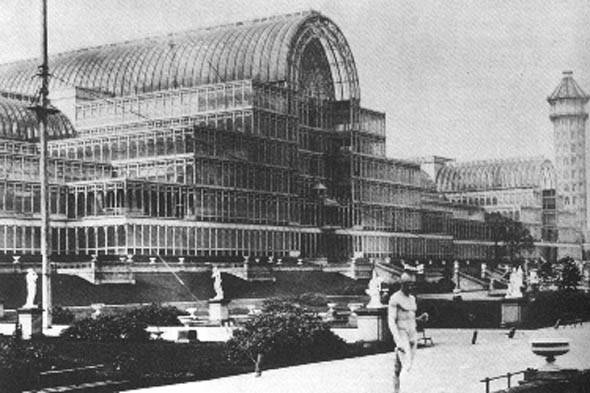
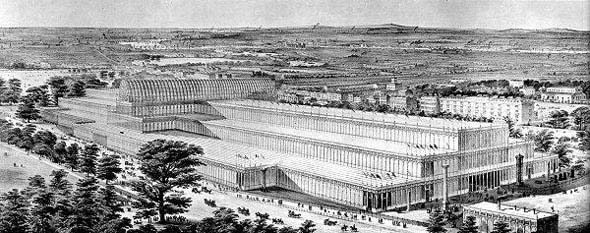
The Crystal Palace, or The Great Exhibition of 1851 (Joseph Paxton).
The Crystal Palace was the manifestation of Industrial Age – for the first time unified metal parts were used, the connector piece invented. The shape, construction and overall design were dictated by the materials used, no additional decorations. Since then – machine aesthetics becomes prevailing.
Bridges Adam (local newspaper writer)
"The design of the building should be as original as its object. It should not be suggestive of the ideas of a pyramid, a temple, or a palace; for it will not be a tomb, a place of public worship, nor a mansion of royalty. The object should determine the design. That is to say, the design should be altogether subordinate to the uses of the building, and should be of the kind that would express them, or at least harmonize with them."
It is claimed that the entire glass production capacity of England was employed on the Crystal palace.
* Length 1,848ft Width 456 ft
* (Compare to St Peters 600' long x 450' wide, 126 years in construction 1506-1626)
* Height of barrel vault: 135'
* Enclosed volume 33,000,000
* 900,00 sq. ft of glass
* 772,784 sq. ft of ground floor area
* 217,000 sq. ft of gallery space
* 18 acres
* 372 roof trusses, 24 miles of Paxton gutter
* 205 miles of sash bar,
* 3000 columns
* 600,000 cubic feet of timber
* Critical component is the connector piece.
|
|
|
|